The dog was chained to the bridge to die.
It should have been nothing more than another cold, empty ride through the outskirts of Cedar Creek at three in the morning. The road was familiar, the hour unforgiving, the darkness thick and indifferent. Headlights cut through mist, tires hummed against asphalt, and the world felt reduced to motion and noise. But that night refused to stay ordinary. Something was wrong. Something waited in the dark.
At the edge of the bridge, where the guardrail bent toward the creek below, a shape emerged—too still, too deliberate. A chain clinked softly in the wind. A blanket lay folded with care, as if someone had tried to make comfort out of hopelessness. Beside it sat a stuffed duck, worn thin by small hands and too many nights held tight. And there were notes. Two of them. One written by a parent whose words collapsed under the weight of love and failure. Another scrawled in uneven letters by a child who begged angels on motorcycles to be real, because believing in people had become too hard.
The bridge was never meant to be a place for goodbyes. It was built for passing over, not for leaving things behind. Yet that night, it became an altar of surrender—until a broken rider and a broken dog found each other in the dark.
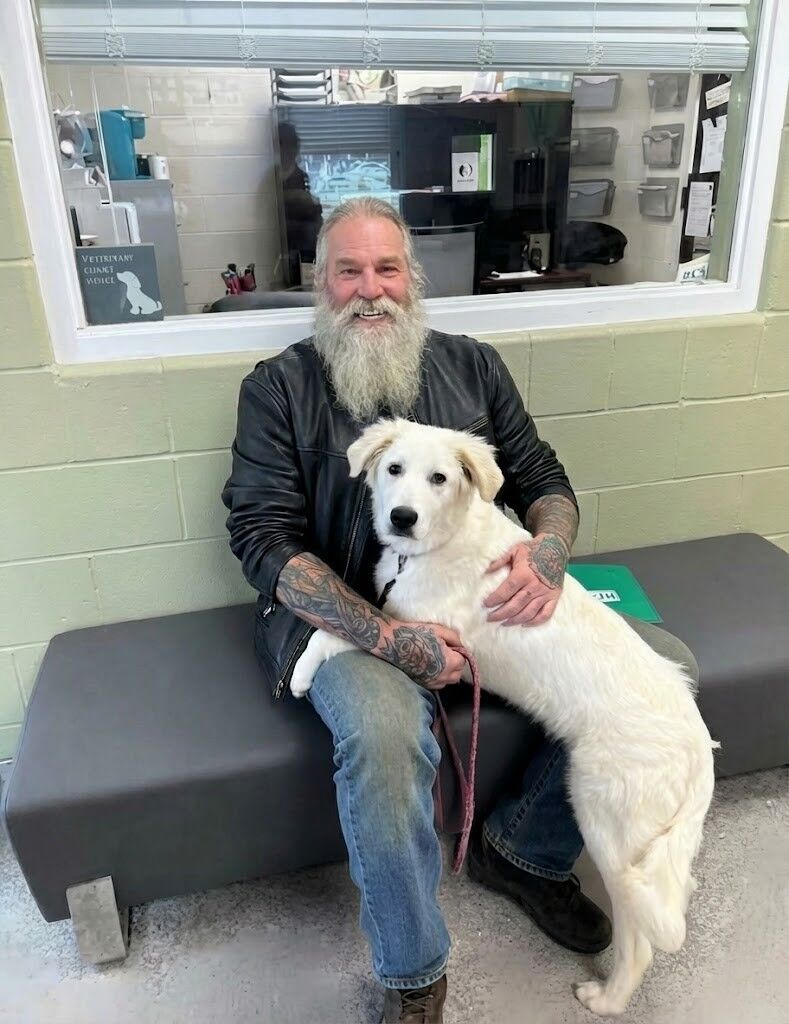
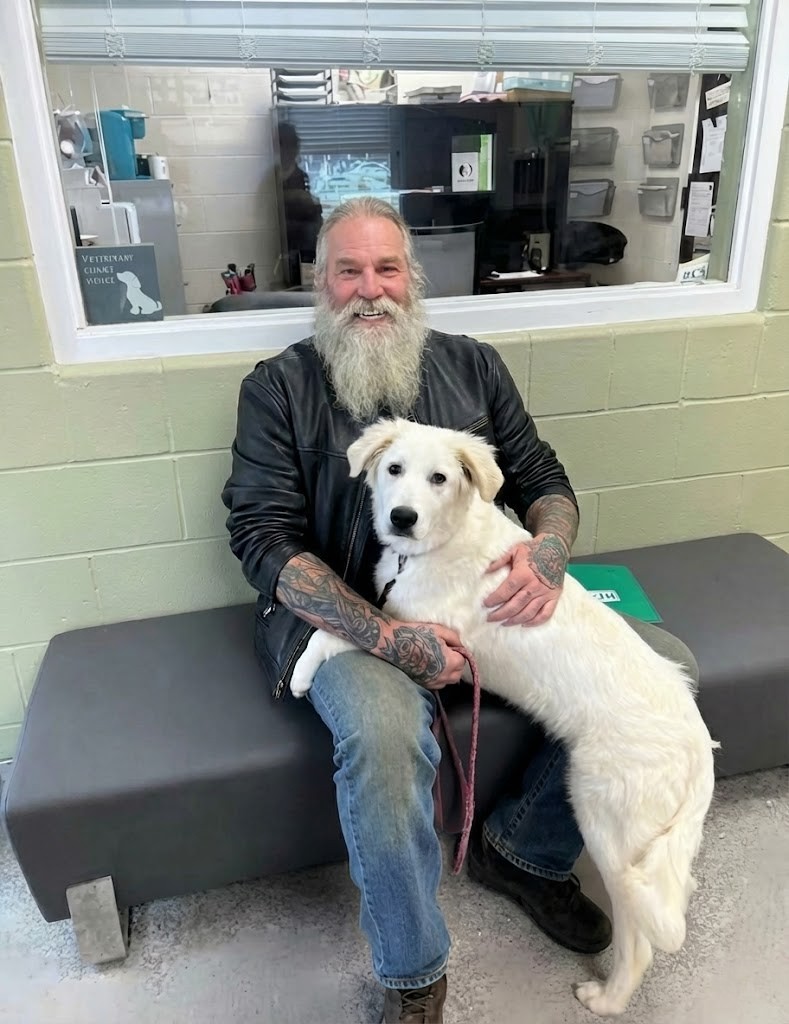
Her name was Daisy. Her body was losing a battle it could not win. The tumor was visible even before a hand reached out to feel it, a cruel certainty under thinning fur. She was tired. She was in pain. But when the man approached, helmet still on, engine ticking as it cooled, her tail moved. Slowly. Weakly. But it moved. Against all logic, against abandonment, against the cold certainty of what had been done to her, Daisy still trusted the world.
That trust forced a decision.
The man had already lost too much. Cancer had taken people he loved, futures he had planned, parts of himself he would never get back. He knew that look—the quiet resignation, the borrowed time, the way hope becomes fragile but stubborn. He could walk away. He could tell himself that some battles are already decided. Or he could fight for the one soul still within reach, even knowing how the story would likely end.
He chose to fight.
He emptied his wallet without counting. He broke the chain. He wrapped Daisy in the blanket meant to be her last comfort and placed her on the bike like she belonged there. In that moment, he stepped directly into someone else’s silent disaster, accepting pain that was never meant to be his—because leaving would have hurt more.
What followed was not a miracle cure. There were no dramatic reversals, no triumphant diagnoses. What came instead was quieter, heavier, and more meaningful. There were vet visits filled with honesty instead of hope. There were medications that bought weeks, then months. There were nights when Daisy slept pressed against him, breathing unevenly but present. There was grief shared in advance, grief that softened instead of shattered.
And there was a little girl.
She learned that angels don’t always arrive glowing and perfect. Sometimes they come exhausted, wearing leather, riding loud machines, and carrying their own scars. She learned that love doesn’t always save forever—but it always matters. Daisy lived one more year. One imperfect, precious year. And in that time, three broken hearts—a rider, a father, and a child—stitched themselves together into a small, stubborn version of family.
When Daisy was finally gone, the loss hurt—but it didn’t hollow them out. Something had been left behind.
A crayon drawing, framed and slightly crooked, showing a dog with wings riding on a motorcycle under a bright, impossible sun.
A rescue fund built not from wealth, but from children’s pocket change and quiet generosity.
And a truth that burns clean and clear:
You don’t have to defeat death to save a life.
You don’t need miracles.
You just have to stop when the night cries, “Help.”