Share
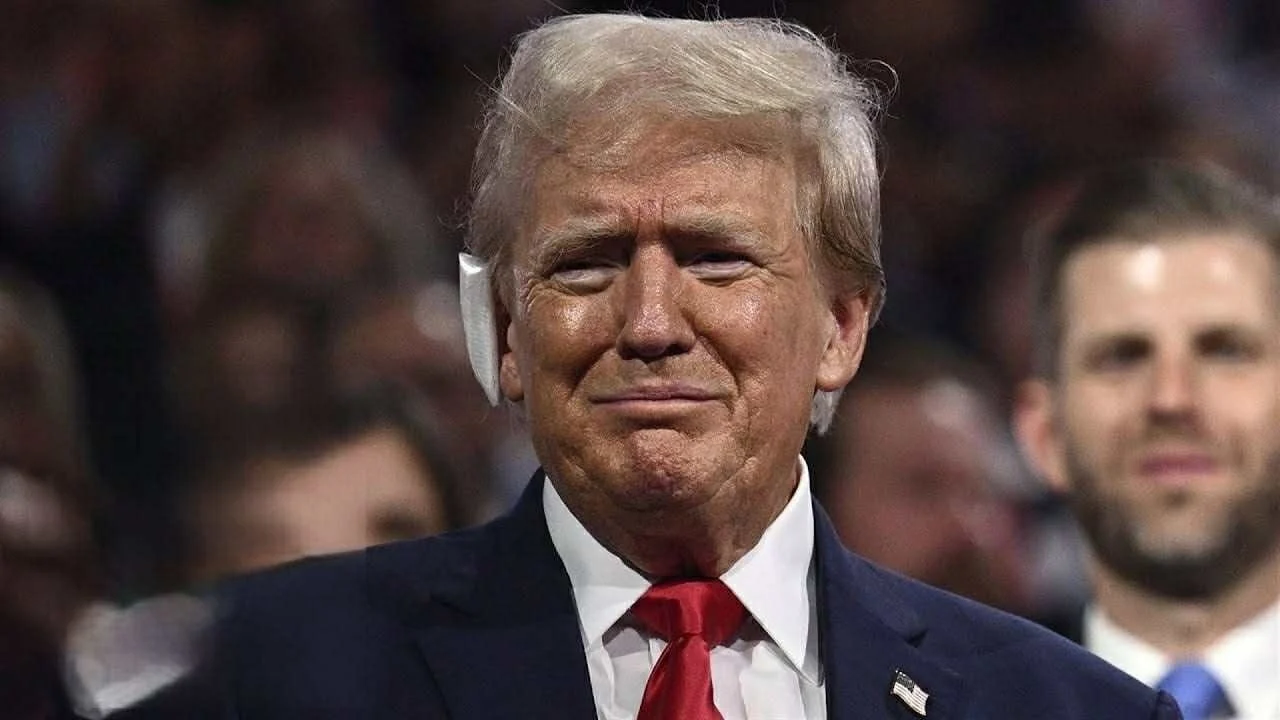
The tone of the room shifted the moment Donald Trump’s voice faltered. Mid-speech, he paused, breaking from his usual cadence as he appeared visibly emotional. For a figure often associated with certainty and forceful delivery, the change was noticeable, drawing immediate attention from those present and from viewers following the moment more broadly.
For many watching, the scene stood out not because of what was said, but how it was said. Trump, who has built much of his public image on confidence and defiance, spoke more slowly, with pauses that suggested the weight of the moment. The reaction in the room reflected that shift. Conversations quieted, and the focus moved away from political positioning toward the unusual nature of the moment itself.
What followed has already begun to generate differing interpretations. Supporters have described it as a rare display of sincerity, pointing to the pressure and scrutiny that accompany public life at that level. Others, while maintaining their broader political views, acknowledged the significance of the moment as something outside the typical tone of political communication. In both cases, the response has centered less on argument and more on perception.
In the hours afterward, reactions spread quickly, not only across media coverage but through public discussion. The moment became a reference point, with people revisiting it and attempting to understand what it signaled—whether it reflected a personal response, a strategic shift, or simply the accumulation of circumstances reaching a visible point.
What remains clear is that moments like this carry weight beyond their immediate context. They interrupt expectations and introduce a different dimension to public figures who are often seen in fixed terms. Whether interpreted as vulnerability, pressure, or something else entirely, the scene added a layer that is likely to remain part of how this period is remembered.
Rather than offering a clear conclusion, the moment leaves an open question about how public perception evolves when familiar figures are seen differently, even briefly. In that sense, its impact may not come from a single statement, but from the way it altered the tone—if only for a moment—of how people were watching.