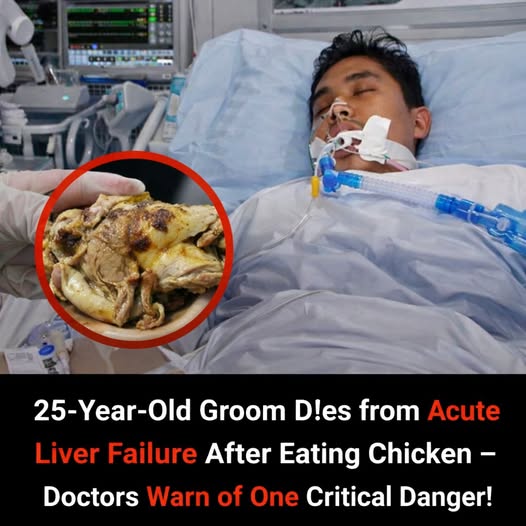
25-Year-Old Groom Dies from Acute Liver Failure After Eating Chicken – Doctors Warn of One Critical Danger!
.png)
The Tragic Incident: A Life Cut Short
According to reports, the young man had been in good health, energetic, and excited for the new chapter of his life. But shortly after eating a meal that included chicken, he began feeling unwell.
The Progression of Symptoms:
Initial Signs: Mild stomach discomfort, which he may have dismissed as indigestion.
Rapid Escalation: Symptoms quickly worsened to include vomiting, profound fatigue, jaundice (yellowing of the skin and eyes), and confusion.
Emergency Response: He was rushed to the hospital, where doctors diagnosed him with acute liver failure—a rare but life-threatening condition that occurs when the liver loses its ability to function in a matter of days or even hours.
The Medical Findings:
Lab tests later revealed that the likely cause of his liver failure was a bacterial infection caused by Campylobacter or Salmonella—common bacteria found in raw or undercooked poultry. In rare cases, these bacteria can trigger a severe systemic reaction, leading to liver inflammation, widespread infection, and ultimately liver failure. For individuals with certain genetic vulnerabilities, or those exposed to a high concentration of pathogens, the condition can become fatal very quickly.
This case underscores a sobering truth: even healthy young adults are not immune to the severe consequences of foodborne illness when conditions align tragically.
The Medical Explanation: How Bacteria Can Lead to Liver Failure
Understanding the pathway from contaminated chicken to acute liver failure helps clarify why prevention matters so deeply.
The Bacterial Threat:
Campylobacter and Salmonella are among the most common causes of foodborne illness worldwide. They thrive in raw poultry and can survive if meat is not cooked to a safe internal temperature.
Infection Mechanism: When ingested, these bacteria can invade the intestinal lining, enter the bloodstream, and trigger a powerful immune response. In rare cases, this response can escalate into systemic inflammation that overwhelms the liver.
Why the Liver Is Vulnerable:
The liver acts as the body’s primary filter, processing toxins and fighting infections. When bacteria or their byproducts flood the system, the liver can become inflamed (hepatitis) and, in severe cases, begin to fail. Acute liver failure means the organ can no longer perform essential functions like detoxifying blood, producing clotting factors, or regulating metabolism.
Risk Amplifiers:
High Bacterial Load: Consuming meat with a significant concentration of pathogens increases the likelihood of severe infection.
Individual Vulnerability: Genetic factors, undiagnosed conditions, or temporary immune suppression can make some people more susceptible to catastrophic outcomes.
Delayed Treatment: Symptoms that escalate rapidly require immediate medical intervention. Every hour counts in cases of acute liver failure.
Critical Food Safety Guidelines: Protect Yourself and Your Loved Ones
Doctors emphasize that while such extreme cases are uncommon, the danger is real—and preventable. Improper handling, storing, or cooking of chicken is a major source of foodborne illness around the world. In this tragic case, the chicken may have appeared well-cooked on the outside but was likely undercooked inside, allowing dangerous bacteria to survive and enter the bloodstream.
1. Always Cook Chicken Thoroughly
Use a Food Thermometer: This is the only reliable way to ensure safety. Chicken must reach an internal temperature of at least 75°C (165°F) at its thickest point.
Don’t Trust Color Alone: Poultry can brown on the outside while remaining raw or undercooked inside, especially in thick cuts, grilled pieces, or stuffed preparations.
Check Multiple Spots: When cooking whole birds or large pieces, test the temperature in several locations to ensure even doneness.
2. Never Wash Raw Chicken
The Splash Risk: Washing raw chicken under running water can aerosolize bacteria, splashing them onto countertops, utensils, nearby foods, and even your clothing.
The Safer Alternative: Pat chicken dry with paper towels if needed, then discard the towels immediately. Cooking to the proper temperature will kill any surface bacteria.
3. Prevent Cross-Contamination
Separate Tools: Use distinct cutting boards and knives for raw meat and ready-to-eat foods like vegetables or bread.
Sanitize Immediately: Wash hands, utensils, and surfaces with hot, soapy water after they contact raw poultry.
Store Safely: Keep raw chicken on the bottom shelf of the refrigerator to prevent juices from dripping onto other foods.
4. Pay Attention to Your Body
Know the Warning Signs: If you feel ill shortly after consuming poultry—especially if symptoms escalate rapidly to include vomiting, fever, jaundice, or confusion—seek medical help immediately.
Don’t Wait: Early detection of foodborne illness or liver dysfunction can mean the difference between life and death. Mention your recent food consumption to healthcare providers to aid diagnosis.
Who Should Be Extra Cautious?
Doctors also warn that certain individuals face higher risks from foodborne pathogens and should exercise heightened vigilance with poultry and other high-risk foods.
High-Risk Groups Include:
Individuals with Pre-existing Liver Conditions: Any compromise to liver function can reduce the body’s ability to fight infection.
Those with Weakened Immune Systems: Including people undergoing chemotherapy, living with HIV/AIDS, or taking immunosuppressive medications.
People with Chronic Illnesses: Diabetes, kidney disease, and autoimmune disorders can increase vulnerability to severe complications.
Pregnant Women, Young Children, and Older Adults: These groups often have less robust immune responses.
For these individuals, what may be a mild stomach upset for one person could turn into a severe, life-threatening complication. Extra caution in food handling and preparation is not just advisable—it is essential.
When to Seek Medical Help: Red Flags After Eating Poultry
If you or someone you know experiences the following symptoms after consuming chicken or other poultry, seek emergency medical care immediately:
Rapidly worsening nausea or vomiting that prevents keeping fluids down
High fever (above 38.5°C / 101.3°F) accompanied by chills
Jaundice: Yellowing of the skin or whites of the eyes
Confusion, disorientation, or extreme lethargy
Dark urine or pale stools, which can signal liver distress
Severe abdominal pain that does not improve
Important: Do not wait to see if symptoms “pass.” Acute liver failure and severe systemic infections can progress with alarming speed. Early intervention saves lives.
Frequently Asked Questions
Q: How common is acute liver failure from foodborne illness?
A: It is extremely rare. Most cases of Campylobacter or Salmonella cause self-limiting gastrointestinal illness. However, the potential severity underscores why prevention matters.
Q: Can I get sick from chicken that looks and smells fine?
A: Yes. Harmful bacteria do not alter the appearance, smell, or taste of meat. Proper cooking temperature is the only reliable safeguard.
Q: Is organic or free-range chicken safer?
A: No. All raw poultry, regardless of farming method, can carry pathogens. Safety depends on handling and cooking, not the source.
Q: What if I accidentally eat undercooked chicken?
A: Monitor for symptoms closely. If you develop fever, vomiting, or other concerning signs, contact a healthcare provider promptly. Do not induce vomiting unless instructed by a medical professional.
Q: Are there vaccines or treatments for these bacteria?
A: There are no widely available vaccines for Campylobacter or Salmonella in humans. Treatment typically involves supportive care; antibiotics may be used in severe cases but are not always effective and can sometimes worsen certain infections.
Final Thought
The sudden death of a healthy, young groom from something as routine as eating chicken serves as a sobering reminder: food safety is not optional. While chicken is a common and nutritious source of protein, it can also be a silent killer if not properly prepared. The cost of neglect can be devastating—not just to one life, but to families and futures forever changed.
Let this be a warning and a wake-up call. Handle your food with care—your life could depend on it. By embracing simple, science-backed practices—using a thermometer, avoiding cross-contamination, and listening to your body—you transform everyday meals into acts of protection. Honor the fragility of life by respecting the power of prevention. In the kitchen, as in life, vigilance is a form of love.
Disclaimer: This article is for informational purposes only and is not a substitute for professional medical advice. If you experience symptoms of foodborne illness or liver dysfunction, seek immediate medical attention. Always follow local food safety guidelines and consult healthcare providers for personal health concerns.