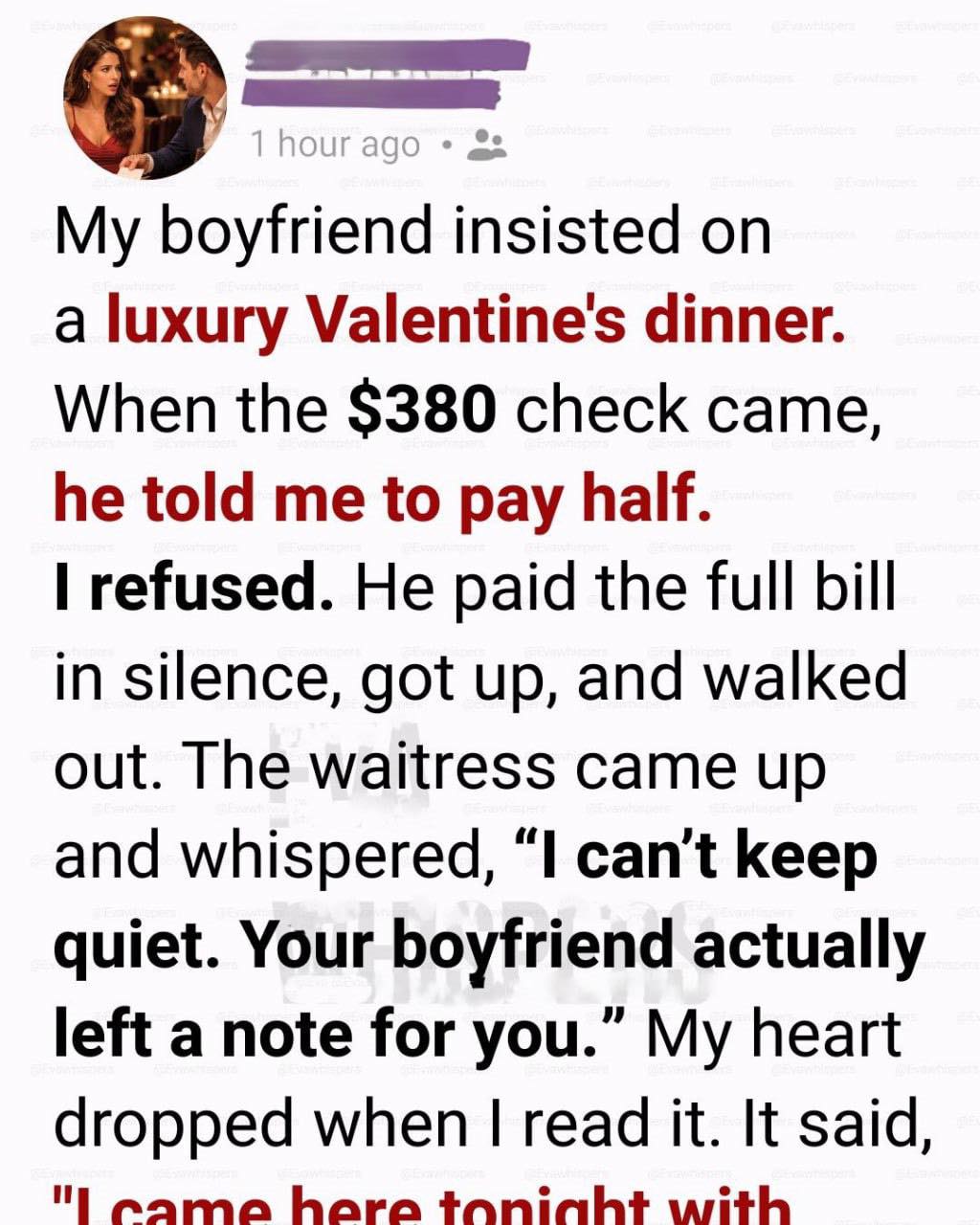
Cruel Valentine Dinner Test Reveals Why A Seven Year Romance Failed
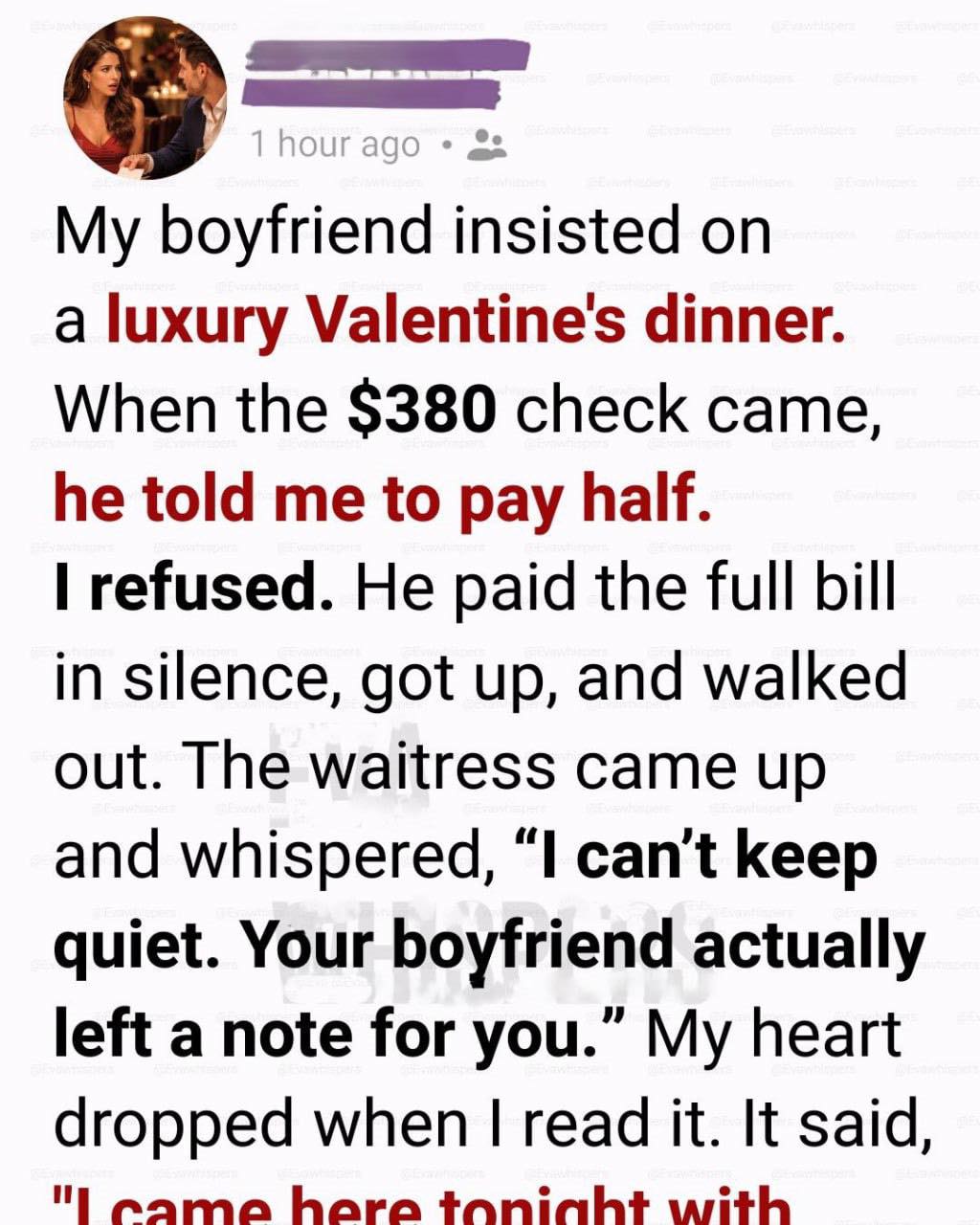
A Proposal That Became a Test — And What It Revealed
After seven years together, she walked into that Valentine’s dinner carrying a quiet certainty.
Not entitlement. Not pressure. Just a sense that the relationship had reached its natural next step.
He had planned everything—insisted on celebrating something “important,” chosen an expensive restaurant, set the tone with care. The evening unfolded exactly as she would have imagined: shared memories, laughter, reflection on everything they had built.
It felt like a moment of arrival.
When Expectation Meets Silence
Then the bill came.
He placed it between them and asked her to split it—equally. Not as a casual suggestion, but as a statement.
She didn’t refuse out of inability. That wasn’t the issue.
She paused because something didn’t match.
This wasn’t an ordinary dinner. It was something he had framed as a meaningful gesture. And in that context, the request felt less like partnership and more like a sudden shift in the rules—one that had never been spoken before.
Instead of explaining, he withdrew.
He paid. He left.
No conversation. No attempt to steady the moment.
Just absence.
The Message That Closed the Door
What came next was not clarity—it was judgment.
A note.
He had brought a ring. The dinner had been a test. Her hesitation, in his eyes, was proof she wasn’t the partner he wanted.
And just like that, seven years were reduced to a single reaction, measured against an expectation she was never given.
What This Was — And What It Wasn’t
There is nothing wrong with wanting fairness in a relationship.
There is nothing wrong with discussing finances openly, even seriously.
But there is a difference between shared understanding and hidden evaluation.
One builds trust.
The other quietly undermines it.
A partner who is preparing for marriage doesn’t set traps. They speak. They ask. They listen. They make space for misunderstanding instead of turning it into a final verdict.
Because real partnership isn’t proven in a single moment.
It’s built over many—especially the imperfect ones.
The Quiet Clarity That Followed
What she felt that night was not just heartbreak.
It was something sharper, but also clearer.
The realization that she had not failed a test—she had been placed in one without consent.
And more importantly:
If this is how conflict is handled before marriage, it rarely becomes easier after.
Walking away wasn’t just about loss.
It was about refusing a future shaped by silent expectations, sudden judgments, and conditions revealed only after they are failed.
Final Thought
Not every ending is a mistake.
Some are a form of protection.
A relationship meant for a lifetime cannot depend on hidden standards or unspoken rules. It requires something steadier:
Clarity.
Respect.
And the willingness to meet each other honestly—without turning love into something that must be passed.
💬 What do you think matters more in a relationship—fairness or communication?