Posted April 23, 2026
Washington, D.C. was wrapped in winter that evening, the kind of cold that sharpened the air and made every light inside the grand hall feel warmer than usual.
The event had been planned for months.
It was a formal gathering attended by political figures, donors, diplomats, and members of the press.
Everything about it was structured.
Every speech was written, reviewed, and approved in advance.
Every movement on stage had been rehearsed.
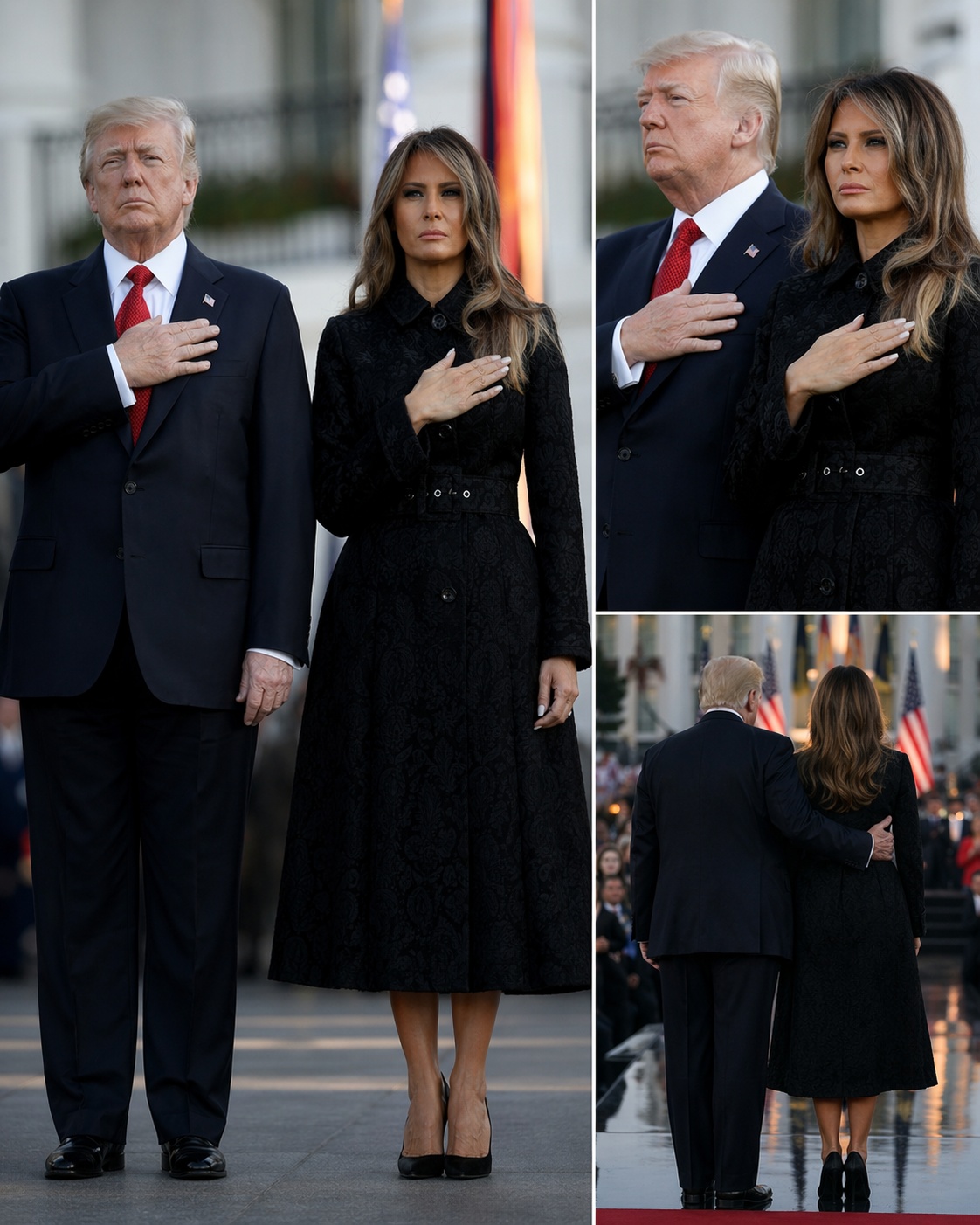
At the center of the program were Donald Trump and Melania Trump.
They were expected to deliver a joint appearance that would follow a familiar format.
He would speak.
She would stand beside him.
The audience would listen.
Then the night would move on.
But what happened that evening did not follow the plan.
Moments before they were scheduled to step onto the stage, a last-minute change was made to the program.
A sensitive topic had emerged earlier that day, one that could not be ignored.
It required a response.
Not a prepared one, but a real one.
There was no time to rewrite the speech.
No time to rehearse new lines.
Donald made the decision to speak without changing the schedule.
Melania agreed without hesitation.
When they stepped onto the stage, the atmosphere felt different immediately.
The audience sensed it.
There was a quiet tension, not uncomfortable, but aware.
Donald walked to the podium.
Melania stood beside him, slightly behind, her posture calm and composed.
For a brief moment, neither of them spoke.
The silence was noticeable.
Donald looked out at the audience, then began.
His voice was steady, but there was a weight to it that had not been there earlier in the evening.
He did not follow the prepared remarks.
Instead, he addressed the situation directly.
He spoke about responsibility.

About facing difficult moments without avoiding them.
His words were not polished in the usual sense.
They were direct.
Measured.
Unfiltered in a way that caught the audience’s full attention.
Melania remained beside him, but her presence was not passive.
She listened closely.
Her expression reflected focus, not performance.
At one point, Donald paused.
It was not a planned pause.
It was the kind that comes when words need a moment to settle before continuing.
The room was completely silent.
No movement.
No distractions.
Melania turned slightly toward him.
She did not speak, but the gesture was enough.
It was a quiet signal of support.
Donald continued.
He spoke about resilience, about standing firm even when the outcome is uncertain.
He did not raise his voice.
He did not attempt to dramatize the moment.
He simply spoke.
And that was enough.
As the speech went on, something shifted in the room.
The formality of the event began to fade.
What remained was the connection between the speaker and the audience.
Melania’s presence became more noticeable with each passing moment.
She was not speaking, but she was part of the message.
Her stillness added weight to his words.
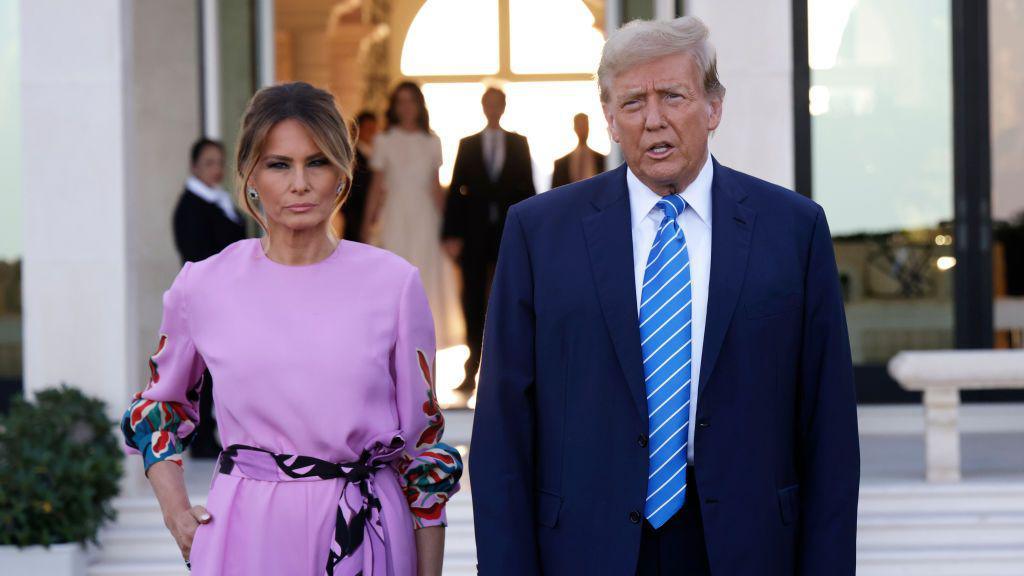
Her attention reinforced his focus.
It was not something that had been planned.
It was something that existed between them.
When Donald reached the end of his remarks, there was no dramatic conclusion.
No line designed to trigger applause.
He simply finished speaking.
For a brief second, the room remained silent.
Then the applause began.
It started slowly, then grew stronger.
People stood.
Not out of obligation, but because they recognized the moment for what it was.
Genuine.
Unscripted.
Real.
As they stepped away from the podium, Melania leaned slightly toward Donald.
Her voice was low, meant only for him.
But those closest to the stage later recalled the exchange.
She told him that sometimes the most important things are the ones you cannot prepare for.
Donald responded quietly.
He said those are the only ones people remember.
The moment lasted only a few seconds, but it stayed with those who witnessed it.
In the hours that followed, clips of the speech began circulating.
Commentators analyzed the tone, the delivery, and the decision to move away from the script.
Some focused on the message itself.
Others focused on the dynamic between them.
The way she stood beside him.
The way he spoke with her there.
It became clear that what people remembered most was not a single sentence.
It was the feeling of the moment.
In the days that followed, discussions continued.
Some described it as a turning point in how public appearances are perceived.
Others saw it as a reminder that authenticity cannot be manufactured.
For Donald and Melania, however, it was not intended to be historic.
It was simply the response to a situation that required honesty.
No script.
No rehearsal.
Just a moment that demanded to be real.
And in that moment, what stood out was not just the words that were spoken.
It was the presence beside them.
The quiet understanding.
The balance between voice and silence.
He spoke.
She stood beside him.
And together, they created something that could not have been planned, but would not be forgotten.