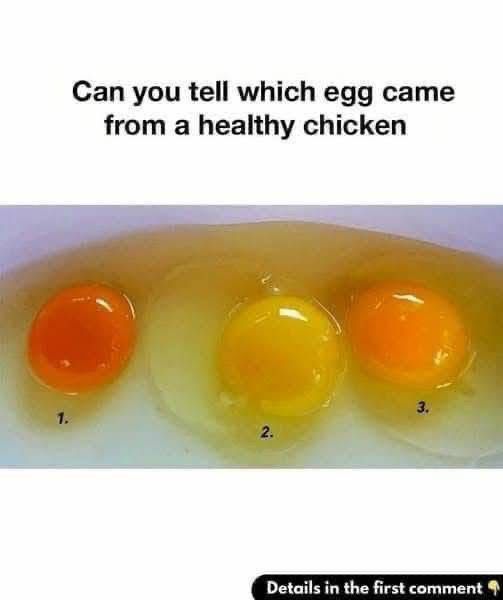

When you crack an egg into a pan or bowl, you’re doing more than just starting a recipe—you’re getting a glimpse into how the egg was produced and, indirectly, how the chicken that laid it lived. A hen’s diet, stress level, and overall health are reflected in the egg itself. Once you know what to look for, it’s surprisingly easy to tell whether an egg comes from a healthy, well-cared-for chicken or from a bird raised under poor conditions.
Understanding these signs helps you make better choices for your family, improves your cooking, and ensures your eggs are safer, more nutritious, and tastier. Here are six reliable indicators of a healthy chicken egg.
1. Shell quality
The shell tells the first part of the story. A strong, well-formed shell is a clear sign of a healthy hen. Pick up the egg—it should feel solid and sturdy, not fragile or chalky. Light pressure shouldn’t dent it easily. Weak shells often indicate nutritional deficiencies, particularly a lack of calcium or vitamin D in the hen’s diet.
2. Shell color and consistency
While shell color depends on breed, a healthy egg will have an even tone without blotches, fading, or rough patches. Cracks, thin spots, or irregular shapes may indicate stress, overcrowding, or poor feed. Eggs from pasture-raised or small-farm hens often have thicker shells because the birds are better nourished and less stressed.
3. Egg white (albumen) quality
The egg white is a strong indicator of freshness and hen health. In a high-quality egg, the white is clear, thick, and clings closely to the yolk. Watery, runny whites usually mean the egg is older or that the hen’s diet lacked protein or essential minerals. Thick whites come from well-fed, low-stress hens with access to sunlight and quality feed.
4. Yolk appearance
The yolk provides the egg’s most striking visual clue. A healthy egg typically has a rich, golden-yellow or orange yolk that stands tall rather than flattening out. Deep-colored yolks come from hens with varied diets, including greens, seeds, and insects, which are rich in carotenoids. Pale yolks often indicate a grain-heavy diet. A strong yolk membrane, resistant to breaking when gently poked, also signals good hen health.
5. Inside the egg
Look for small blood or meat spots. Occasional spots are natural and harmless, but frequent spotting may indicate stress or poor living conditions. Eggs from healthy hens usually appear uniform both inside and out. Consistency is more important than perfection.
6. Smell and freshness
A fresh egg from a healthy hen should have little to no odor when cracked open. Any sulfurous or rotten smell is a red flag, indicating spoilage or contamination. Boiled eggs from healthy hens should still smell clean. A simple water test can confirm freshness: place the egg in a bowl of cold water. Fresh eggs sink and lie flat; older eggs stand upright or float due to growing air pockets. Eggs from healthy hens usually have smaller air cells because their shells are stronger and retain moisture longer.
Beyond these physical signs, understanding why healthy hens produce better eggs is key. Chickens allowed to roam outdoors, forage naturally, and experience less stress eat a more varied diet, resulting in eggs richer in omega-3s, vitamins A, D, and E, and better flavor overall. Clean, uncrowded environments reduce bacterial contamination, and low stress promotes strong shells and healthy egg interiors.
Labels such as “pasture-raised,” “free-range,” and “organic” can help guide choices, but local farmers and small producers often provide even more transparency. Talking directly to producers allows you to learn how their chickens are fed, housed, and cared for.
Ultimately, high-quality eggs reflect respect for the animals that produce them. Strong shells, thick whites, vibrant yolks, uniform interiors, fresh smell, and good performance in the water test all indicate healthy, well-treated hens. Choosing eggs with these qualities results in better cooking, higher nutritional value, and peace of mind—supporting farming practices that prioritize both animal welfare and food quality.